Overcoming scalability challenges in AAV manufacturing

In this guest blog, Rubin Joshi, Business Development Manager at Aldevron, explains how scaling adeno-associated virus (AAV) manufacturing remains a major bottleneck for gene therapy development, highlighting how the Testa Center provides a pilot‑scale, non‑GMP environment for teams to validate processes under industry‑like conditions. He also emphasises the role of Aldevron’s reliable, production‑grade plasmid DNA in reducing variability and enabling participants to accurately assess and de‑risk their AAV manufacturing innovations.
Turning AAV breakthroughs into manufacturing reality
Adeno-associated virus (AAV) vectors are among the most frequently used viral vectors for gene therapy, yet manufacturing scalability remains a critical barrier to clinical and commercial success.
This imbalance is becoming more pronounced as demand accelerates. The global AAV vector manufacturing market is projected to grow at more than 18–22% CAGR through the next decade, driven by a surge in late-stage gene therapy programs, yet scalability, process variability and raw material constraints remain persistent challenges.
For AAV researchers, the implications are immediate. The leap from benchtop success to reliable, scalable, GMP-aligned AAV manufacturing is where programs stall, or surge. This is precisely the gap the Testa Center in Uppsala, Sweden, was designed to address. Through a pilot scale, non-GMP environment, researchers can test and verify AAV manufacturing innovations under industrial like conditions, generating real data while retaining full ownership of their IP and results, before committing to full cGMP scale.
How the Testa Center moves AAV innovation from theory to practice
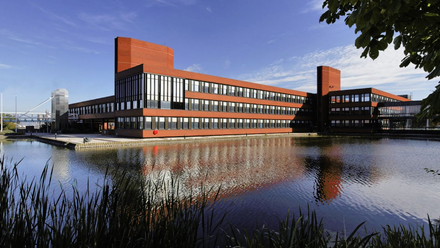
As a public-private initiative between the Swedish government and Cytiva, the Testa Center offers four comprehensive bioprocess laboratories, advanced single-use systems and domain experts dedicated to facilitating the transition from discovery to industrialisation, all while enabling full retention of results and intellectual property.
In support of life science innovation, the Testa Center created the Testa Challenge, an event where industry relevant processes run by Testa Center staff enable external teams to evaluate and validate novel technologies in a manufacturing-like environment. This year’s challenge addresses an AAV production process.
This three-week, fully funded, open innovation program enables selected teams to integrate technical or digital innovations into a standard AAV bioproduction workflow at the Testa Center, gaining real-world process data, expert mentorship and seminars, while retaining full ownership of their technology and generated IP.
Working together to de-risk AAV with reliable plasmid DNA supply
The production of AAV vectors is fundamentally dependent on plasmid DNA, which forms the core input for the viral backbone, helper functions and the therapeutic cargo cassette.
Jozsef Vasi, Head of Operations at Testa Center, said:
It is very simple: the AAV particles we generate need to have the plasmid encoding for the viral particle, the helper, and the cargo and that is exactly what Aldevron provided. It is the technology; the plasmids needed for the transfection of the cells and the ability to read the cells.
For the upcoming Testa Challenge, Aldevron is supplying production-grade plasmid DNA to ensure that teams work with consistent, high-quality inputs. This approach allows participants to accurately assess the performance of their process technologies, PAT or digital tools without interference from inconsistencies in raw material quality.
Jesper Hedberg, Director of Fast Trak PDS EMEA and Testa Center, said:
We have an excellent relationship, with close collaboration, understanding of techniques and mutually shared knowledge. We see significant value surrounding our work together with Aldevron. This collaborative model combining reliable inputs, shared technical context and access to a manufacturing-scale evaluation environment, enables teams to efficiently verify scalable AAV manufacturing processes using credible data. As a global CDMO, Aldevron aims to remove one of the earliest barriers in AAV development by delivering highly reliable, ready-to-use plasmids. Available off-the-shelf, these plasmids shorten timelines and reduce upfront costs, without compromising quality. They are already embedded in multiple clinical programs, giving developers real-world validation, not just theoretical performance. Importantly, Aldevron can provide freedom to operate licensing from research through commercialisation, helping developers avoid costly and complex IP surprises as programs scale.
The takeaway
For organisations developing AAV production methodologies, tools or digital controls, the Testa Center offers an authentic bioprocess setting, while the Testa Challenge provides three focused weeks to establish scalable AAV manufacturing. By employing a standardised AAV production workflow and leveraging Aldevron’s reliable plasmid DNA supply, participants can evaluate innovation against production-grade inputs and bridge the gap between research insights and scalable, industrial reality.